
Analysis
HS2’s Birmingham viaduct highlights the growing complexity of railway construction
HS2’s latest Birmingham viaduct works highlight the complex engineering required to build new railway infrastructure above a busy existing network.
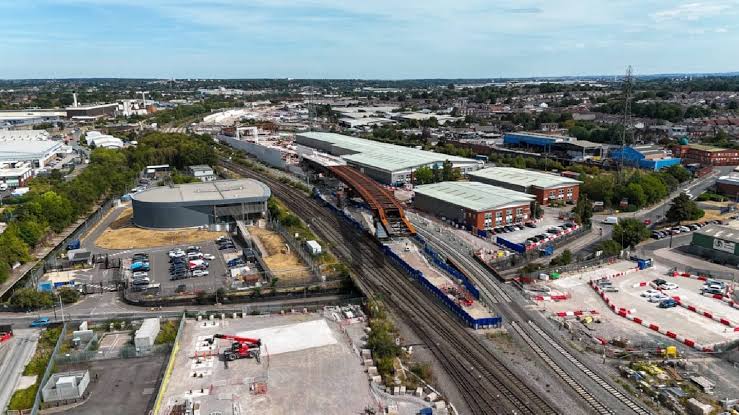
The construction of HS2 through Birmingham has reached another major milestone, with engineers completing the first major launch of the Duddeston Junction Viaduct as work continues to bring the high-speed railway into the city centre.
The viaduct will eventually cross six existing railway tracks, including three passenger lines and three freight lines, creating one of the most technically challenging sections of the route into the new Curzon Street Station.
The first 170 metres of the structure has now been launched across two freight lines which are used to transport goods into Birmingham.
But what makes the construction of the viaduct so challenging?
Building above a live railway
The Duddeston Junction Viaduct is the first and longest of five interconnected structures forming what HS2 calls the Curzon Approaches.
Once complete, the structure will stretch for around 700 metres and rise from ground level to approximately 12 metres above the existing railway.
Unlike a conventional straight viaduct, the structure follows a changing horizontal curve while also climbing on a three per cent gradient.
This combination creates additional challenges for engineers working on the alignment, construction and eventual launching of the structure.
The viaduct is being constructed within a narrow corridor surrounded by existing railway infrastructure and industrial areas.
At its busiest, around 90 engineers and other workers are involved in the construction operation.
So how do you construct a structure of this size while keeping the railway below it operating?
Moving the viaduct into position
Rather than constructing the entire viaduct directly above the railway, engineers are assembling sections before progressively launching the structure into position.
The weathering steel structure consists of 14 spans, each approximately 55 metres long, with a total structural weight of around 6,835 tonnes.
Seven of the spans will eventually be launched across the existing railway corridor.
As each section is completed, it is added to the rear of the structure before the entire viaduct is gradually moved forwards.
Once the structure has crossed the railway, the remaining spans can be installed on the opposite side using heavy lifting equipment.
The first launch has now taken 170 metres of the structure across two freight lines.
But this is only the beginning of the operation.
The next major stage will see the viaduct launched across three passenger railway lines, with that work currently scheduled to begin in December.
Years of preparation
The latest milestone follows several years of preparation at the site.
HS2's construction partner, Balfour Beatty VINCI, began preparing the area in 2023.
The early stages involved diverting major utilities, dealing with contaminated land and carrying out modifications to the existing railway infrastructure.
Two freight lines also had to be moved onto new infrastructure to create enough space for the construction of the new viaduct and its supporting structures.
This demonstrates one of the biggest challenges facing major railway construction projects.
The work does not take place on an empty site.
Instead, engineers have to build new infrastructure alongside existing railways, roads, utilities, businesses and other structures that may have been in place for decades.
For HS2, this is particularly important in Birmingham, where the final section of the route into Curzon Street passes through an already heavily developed part of the city.
What happens when construction meets an operational railway?
Keeping existing railway services running is another major consideration.
The Duddeston Junction Viaduct will eventually cross six railway lines carrying a mixture of passenger and freight services.
Network Rail says the corridor currently carries more than 200 passenger and freight services every day.
That means construction work has to be carefully planned around the railway rather than simply closing the entire area for an extended period.
HS2 and Network Rail have therefore been working together on the programme, with the construction sequence designed to minimise disruption to services.
But as the project moves towards the passenger lines, the complexity increases.
Heavy construction activity has to be coordinated with railway operations, safety requirements and access arrangements.
So could this type of construction become increasingly important as Britain attempts to expand its railway network?
Building new infrastructure around the existing network
The Duddeston Junction Viaduct is an example of a wider challenge facing railway construction in the UK.
New railway infrastructure often has to be built around an existing network that cannot simply be removed or closed for long periods.
This can mean building bridges over active railway lines, constructing new tunnels alongside existing infrastructure and moving roads, utilities and other services to make room for new routes.
For engineers, this creates a very different challenge from building a railway on an undeveloped site.
Every stage has to be carefully planned because mistakes or delays can have consequences beyond the construction project itself.
A delay to one part of the programme can affect access, possessions, surrounding roads and the operation of existing railway services.
What happens next?
The first 170 metre launch is an important milestone, but the Duddeston Junction Viaduct still has a significant amount of construction ahead.
The next major stage will involve launching the structure across the three passenger railway lines, with that phase expected to begin in December.
The overall operation is expected to continue until summer 2027.
Once complete, the viaduct will form part of the final approach into Birmingham Curzon Street, carrying HS2 trains through the city's industrial heartlands and towards the new station.
For the construction teams involved, the project demonstrates how modern railway engineering increasingly requires the industry to work within extremely constrained environments.
It is not simply about building the structure itself.
Engineers have to consider the existing railway, freight operations, passenger services, surrounding infrastructure and the logistics of moving thousands of tonnes of steel into position.
And as Britain continues to look at expanding and modernising its railway infrastructure, these challenges are unlikely to become any simpler.
The question is whether projects such as Duddeston Junction can demonstrate how new railway infrastructure can be delivered alongside the existing network, without compromising the services that already depend on it.