
Analysis
Is digital signalling the future of Britain’s railway?
As Britain begins to modernise its ageing signalling network, digital technology could transform the way trains are controlled, but significant questions remain over cost, capacity, skills and how quickly the transition can be delivered.
 Helena WhitcombeEditor31 August 2026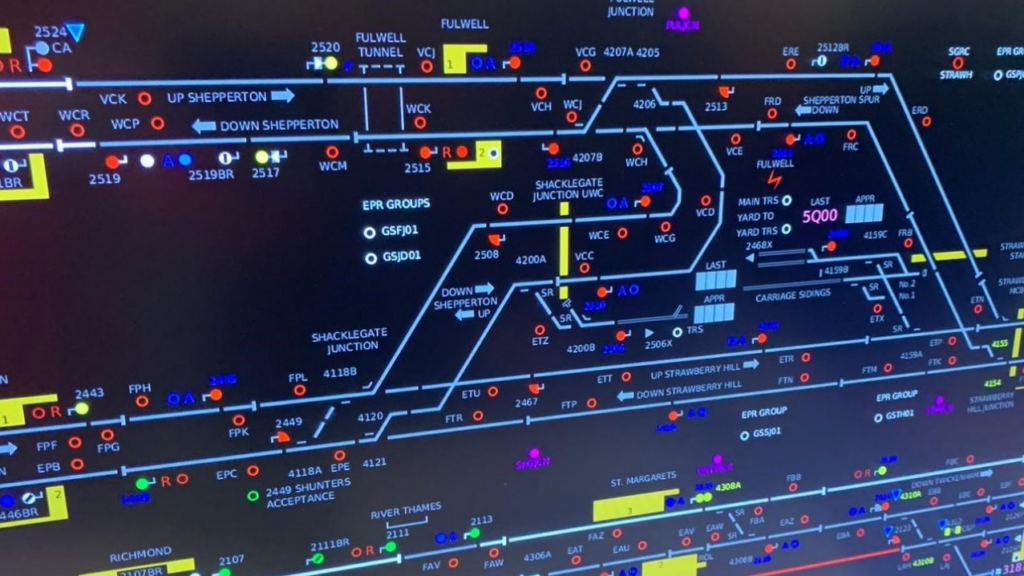
Britain’s railway is entering a period of significant change as traditional lineside signalling systems are gradually replaced by digital technologies designed to improve capacity, reliability and the way trains are managed across the network.
For passengers, signalling is something that is rarely noticed until something goes wrong.
However, behind every journey is a complex system of signals, control centres, trackside equipment and communication technology working together to keep trains moving safely.
With parts of the UK network still relying on signalling technology that has been in operation for decades, the industry faces an important question.
How quickly can Britain modernise its signalling infrastructure, and what will it take to complete the transition?
What is changing?
Traditional railway signalling relies heavily on equipment positioned alongside the track.
Signals communicate information to drivers, telling them whether they can proceed, slow down or stop, while signalling systems and track circuits help control the movement of trains.
But modern railway technology is increasingly moving information away from the trackside.
Digital signalling systems can provide trains and control centres with more detailed information about their position and movement, potentially allowing trains to operate more efficiently across the network.
One of the technologies being introduced in Britain is the European Train Control System, or ETCS.
Rather than relying entirely on conventional lineside signals, ETCS uses digital information to communicate between the train and the railway infrastructure.
So could this eventually change the way Britain's railway operates?
Why does signalling matter?
Signalling is fundamental to railway safety.
The system has to ensure that trains are separated correctly and that drivers receive accurate information about the route ahead.
But signalling also has a direct impact on capacity.
The more efficiently trains can be controlled, the more services can potentially operate across a section of railway.
This becomes particularly important on busy routes where passenger and freight operators are competing for limited capacity.
If trains have to maintain larger gaps because of the limitations of an older signalling system, valuable railway capacity can effectively be left unused.
Could digital signalling therefore allow more trains to operate without building entirely new railway lines?
Potentially.
However, the benefits depend on how the technology is implemented and whether other parts of the network can support the additional capacity.
What is ETCS?
ETCS forms part of the European Rail Traffic Management System and is designed to create a more standardised approach to train control across Europe.
Rather than relying solely on conventional signals positioned beside the track, information can be displayed directly within the driver's cab.
The system continuously monitors the train's movement and can intervene if the train exceeds permitted limits.
For the UK, the technology also provides an opportunity to replace some of the older signalling infrastructure currently operating across the network.
But introducing a new signalling system is not as simple as replacing one piece of equipment with another.
Trains need to be fitted with compatible technology, infrastructure needs to be upgraded and railway staff require appropriate training.
The transition therefore involves both technology and people.
Why has Britain been slow to modernise?
One of the biggest challenges is the sheer scale and complexity of the UK railway.
Britain has one of the oldest railway networks in the world, with infrastructure that has developed over many generations.
Different routes use different signalling technologies, some of which date back decades.
Replacing these systems requires major investment and often means taking sections of railway out of service while engineering work takes place.
And there is another problem.
Railway signalling cannot be considered in isolation.
Changes to signalling can affect track layouts, level crossings, stations, trains, control centres and operating procedures.
A signalling upgrade can therefore become a major infrastructure programme rather than simply a technology installation.
Could digital signalling improve reliability?
One of the potential benefits of modern signalling is improved reliability.
Older signalling equipment can require extensive maintenance, while faults can cause significant disruption to passengers and freight operators.
Modern systems can provide more detailed information about the condition and operation of railway equipment, potentially allowing problems to be identified before they cause major failures.
But will new technology automatically mean fewer delays?
Not necessarily.
Signalling is only one part of the railway.
Track failures, points problems, power supply issues, rolling stock faults and extreme weather can all cause disruption regardless of the signalling system being used.
The benefit of digital signalling is therefore likely to come from its ability to improve the way the railway is operated as a whole, rather than simply removing one source of delay.
What about the cost?
Modernising Britain's signalling network will require significant investment.
The industry must balance the cost of replacing existing systems against the potential benefits of increased capacity, improved reliability and lower long-term maintenance requirements.
For government and infrastructure managers, this creates a difficult question.
When should an ageing signalling system be replaced, and when is it more cost-effective to continue maintaining it?
Replacing infrastructure before the end of its useful life can require significant upfront investment.
Waiting too long, however, can leave the railway increasingly dependent on obsolete equipment and specialist skills that are becoming harder to find.
This is also a challenge for the supply chain.
Signalling requires highly specialised engineering expertise, meaning the industry needs a workforce capable of designing, installing, testing and maintaining increasingly sophisticated systems.
What does the future look like?
The long-term direction of travel appears increasingly clear.
The railway is moving towards systems that rely more heavily on digital communication, automation and real-time information.
However, Britain's railway will not suddenly become fully digital.
The transition is likely to take many years, with different routes being upgraded at different times depending on their condition, capacity requirements and investment priorities.
The challenge will be ensuring that individual signalling programmes form part of a wider strategy rather than becoming isolated upgrades.
So what happens next?
As Great British Railways moves towards becoming responsible for a more integrated railway, signalling could become an important part of its long-term strategy.
The ability to coordinate infrastructure investment, train operations and capacity planning could make it easier to determine where digital signalling can deliver the greatest benefit.
For passengers, the technology may remain largely invisible.
They are unlikely to notice the signalling system controlling their train when everything is working properly.
But if digital signalling can increase capacity, reduce failures and allow trains to be operated more efficiently, its impact could be felt across the network.
The question is no longer whether railway signalling will become more digital.
It is how quickly Britain can make the transition, how much it will cost and whether the industry can deliver the skills and investment needed to make it work.
About the author
Helena Whitcombe
Helena has covered UK rail infrastructure and policy for more than fifteen years, reporting on every major enhancement programme of the last decade. (Sample profile.)
More from this authorMore from Signalling
In-cab signalling rollout passes halfway point on the East Coast
More than half of the East Coast in-cab signalling programme is now in service, with operators reporting improved headway reliability and a sharp reduction in signal-related delay minutes.
Priya Raghunathan · 23 Aug 2026 · 7 min read