
Analysis
Great British Railways: Will structural reform actually fix Britain’s railway?
As Great British Railways moves closer to becoming a reality, the industry faces a bigger question: can structural reform deliver the reliability, investment and long-term strategy Britain’s railway has been promised?
 Sarah EnwrightBusiness Editor31 August 2026
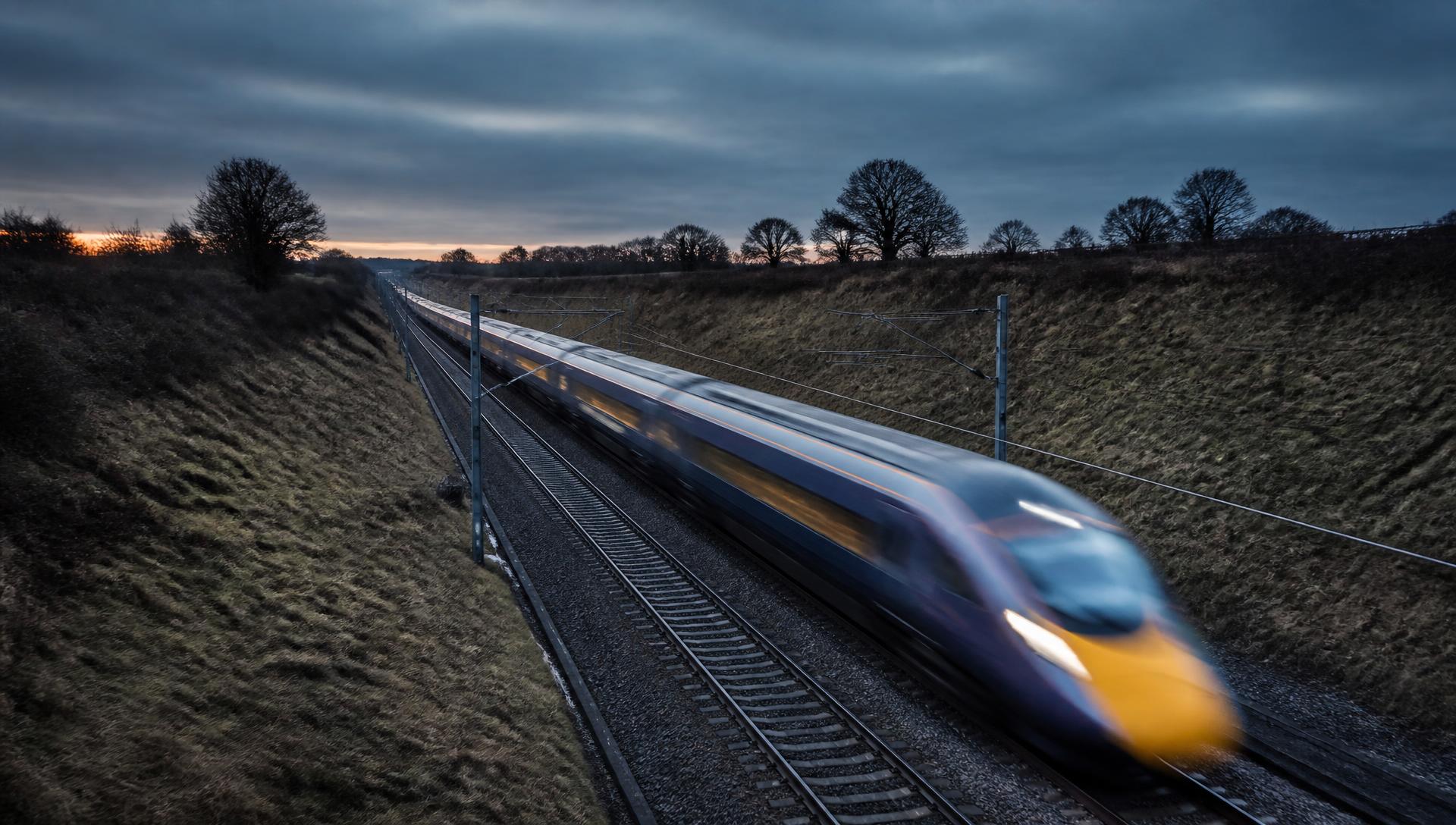
Britain’s railway is approaching one of the biggest changes to its structure in decades, with Great British Railways set to bring together track and train under a single publicly owned organisation.
The Government has described the reform as a fundamental change to the way Britain’s railway operates, with the aim of reducing fragmentation, improving reliability and delivering better value for passengers, freight customers and taxpayers.
The Railways Bill has now progressed through the House of Commons and is being considered by the House of Lords, with the Government targeting Royal Assent by the end of 2026 and the establishment of Great British Railways in summer 2027.
But after years of delays, cancellations, industrial disputes and rising pressure on infrastructure, a much bigger question remains.
Will changing the structure of the railway actually make it better?
Why is Britain’s railway being reformed?
The railway has become increasingly complex over the decades, with responsibilities divided between infrastructure managers, train operators, government departments, regulators and other organisations.
The Government argues that this fragmentation has made it harder to make decisions across the railway as a whole.
Under the proposed reforms, Great British Railways will become the organisation responsible for bringing much of this system together.
More than 17 organisations and functions are expected to be brought together under GBR, including Network Rail and publicly owned passenger operators.
The intention is to create what the Government describes as a single “guiding mind” for the railway.
So will putting more responsibility in one organisation make decision-making easier?
In theory, it could.
A railway where the organisation responsible for operating services and the organisation responsible for maintaining infrastructure are more closely aligned should make it easier to plan around the needs of the entire network.
At present, decisions can involve several different organisations, contractual arrangements and competing priorities.
The question is whether GBR can remove those barriers without simply creating another layer of bureaucracy.
Can GBR improve reliability?
Reliability is likely to be one of the biggest tests of the new organisation.
Passengers do not necessarily care which organisation owns a particular piece of infrastructure or which company is responsible for a train.
They want the train to arrive on time, the information to be accurate and the railway to operate consistently.
This sounds straightforward.
However, improving reliability across Britain's railway is considerably more complicated.
The network is heavily used, much of the infrastructure is ageing and major maintenance and enhancement programmes have to compete for access to the railway.
Recent disruption caused by extreme weather has also demonstrated how infrastructure problems can quickly affect services across large parts of the network.
The question for GBR will therefore be whether greater organisational control can translate into better operational performance.
A single organisation may be able to identify problems more easily, but it will still require sufficient funding, engineering capacity and access to deliver the necessary work.
Structural reform alone cannot replace worn track, modernise signalling or increase railway capacity.
What about investment?
Investment could become one of the most important tests of GBR's success.
The Government wants the new organisation to provide greater certainty and a clearer long-term direction for the railway.
For the supply chain, this matters.
Rail companies need confidence that there will be a reliable pipeline of work before making major investments in people, equipment, technology and manufacturing capacity.
A fragmented approach can make that more difficult, particularly when major projects are repeatedly delayed or priorities change.
Could GBR therefore provide the certainty the supply chain has been asking for?
That will depend on how the organisation is funded and how much freedom it has to plan beyond individual spending periods.
The Government has also said that rail reform should support economic growth, while the Railways Bill includes a requirement for the Secretary of State to set rail freight growth targets.
One target already confirmed is a 75% increase in rail freight moved by 2050.
That is an ambitious target.
But increasing freight volumes will require more than simply setting a target.
There will need to be sufficient capacity, suitable terminals, investment in rolling stock and infrastructure and a railway capable of accommodating additional freight services alongside passenger demand.
Does public ownership guarantee a better railway?
This may be the most difficult question facing the reform programme.
The Government has now moved to enshrine public ownership of Great British Railways in legislation.
But ownership and performance are not the same thing.
A publicly owned railway can still experience delays, infrastructure failures, rising costs and poor decision-making.
Equally, changing ownership does not automatically resolve the engineering and capacity constraints facing the network.
A recent report examining the future of GBR warned that renationalisation alone would not fix Britain's railway and argued that the new organisation will need operational autonomy, clear accountability and a strong long-term strategy.
This is where the success of the reform may ultimately be determined.
Will GBR be given enough freedom to make long-term operational decisions?
Or will it remain heavily influenced by short-term political priorities?
What happens to the private sector?
Although Great British Railways will be publicly owned, that does not mean the private sector will disappear from Britain's railway.
Rolling stock companies will continue to play a role, while suppliers, engineering companies, technology businesses and other private organisations will remain important to the operation and development of the network.
The Government has also said that reform should create opportunities for investment and innovation.
This could potentially create a different relationship between the public sector and the railway supply chain.
Instead of simply commissioning individual projects, GBR could have the opportunity to take a longer-term approach to investment and procurement.
But once again, certainty will be critical.
If companies are expected to invest in new technology, manufacturing capacity or specialist skills, they need to know that there will be a sustained market for those capabilities.
Could GBR actually change the passenger experience?
Ultimately, this is where passengers will judge the reform.
The Government can create a new organisation, change legislation and restructure responsibilities, but passengers are unlikely to consider the reform a success unless they actually notice an improvement.
That could mean more reliable services, simpler ticketing, better information when things go wrong and a railway that is easier to use.
The Government intends for GBR to introduce a simpler retailing system, including a single website and app for much of the railway.
But will passengers notice the difference beyond the branding?
That will depend on whether structural changes translate into practical improvements.
A new organisation cannot, by itself, make a train run faster or prevent every failure.
What it can potentially do is make it easier for the railway to make decisions as one system rather than as a collection of separate organisations.
What will success look like?
The biggest risk for Great British Railways may not be that the reform fails to change the railway.
It may be that it changes the railway without changing the things passengers and businesses actually experience.
If GBR simply replaces one complicated structure with another, the industry could find itself several years from now asking the same questions it is asking today.
But if the organisation can provide clearer accountability, longer-term investment planning and better coordination between infrastructure and operations, the potential benefits could be significant.
The railway does need reform.
The challenge is ensuring that reform is focused on the problems that actually affect the network rather than simply changing who sits where within the organisation.
So, will Great British Railways work?
That question cannot be answered yet.
GBR does not formally exist, and the legislation establishing it is still progressing through Parliament.
What is becoming clearer, however, is that the new organisation will inherit a railway facing some very old problems.
Ageing infrastructure, limited capacity, skills shortages, financial pressure and the increasing impact of extreme weather will not disappear when GBR is created.
The opportunity is to approach those problems differently.
If Great British Railways can provide the railway with a long-term strategy, stronger coordination and greater certainty for the people and companies that maintain and develop it, the reform could represent a genuine turning point.
If it cannot, the industry may simply have a new organisation managing many of the same challenges.
For now, the question is no longer whether Britain's railway is going to change.
It is whether Great British Railways can make that change count.
About the author
Sarah Enwright
Sarah reports on contracts, investment and the commercial shape of the UK rail supply chain. (Sample profile.)
More from this authorMore from Policy

Traffic management procurement reshapes the software market
Plans for a single national traffic management platform are attracting software businesses from outside rail, unsettling incumbent supplier relationships.
Sarah Enwright · 13 Aug 2026 · 6 min read
Reform is finally producing structural decisions
After years of consultation, structural decisions are now being taken — and the supply chain is watching how accountability for enhancement delivery is allocated.
Helena Whitcombe · 8 Aug 2026 · 6 min read
Report: UK rail investment tracker, Q3 2026
A sample quarterly view of committed capital, pipeline value and regional distribution across UK rail investment.
Sarah Enwright · 6 Aug 2026 · 9 min read